
What Are the Early Signs of Prostate Problems? 10 Symptoms Men Should Not Ignore
Prostate problems can develop without obvious warning signs. Learn the 10 symptoms men should never ignore.

nanadwumor
-
Prostate problems can cause urinary changes and pain.
-
Blood in urine or semen needs medical attention.
-
Early prostate cancer may have no symptoms.
-
Medical tests help detect prostate problems.
RECOMMENDED ARTICLES
What Are the Warning Signs of Kidney Disease? 10 Symptoms to Know
Your kidneys can be in trouble without you feeling sick. Learn the warning signs your body may show before kidney disease becomes more serious. Kidney disease can develop silently, with few or...

Why Am I Always Tired? 10 Possible Causes of Constant Fatigue
You sleep, you rest, yet you still feel tired. Why? Constant tiredness can have many causes, and some may surprise you. Poor sleep, stress and diet can cause constant tiredness. Anaemia,...

What Are the Early Signs of Diabetes? 10 Symptoms You Should Know
You may have diabetes without knowing it. Your body can give you warning signs long before the condition becomes serious. Here are 10 symptoms you should know. Diabetes can develop slowly, and...
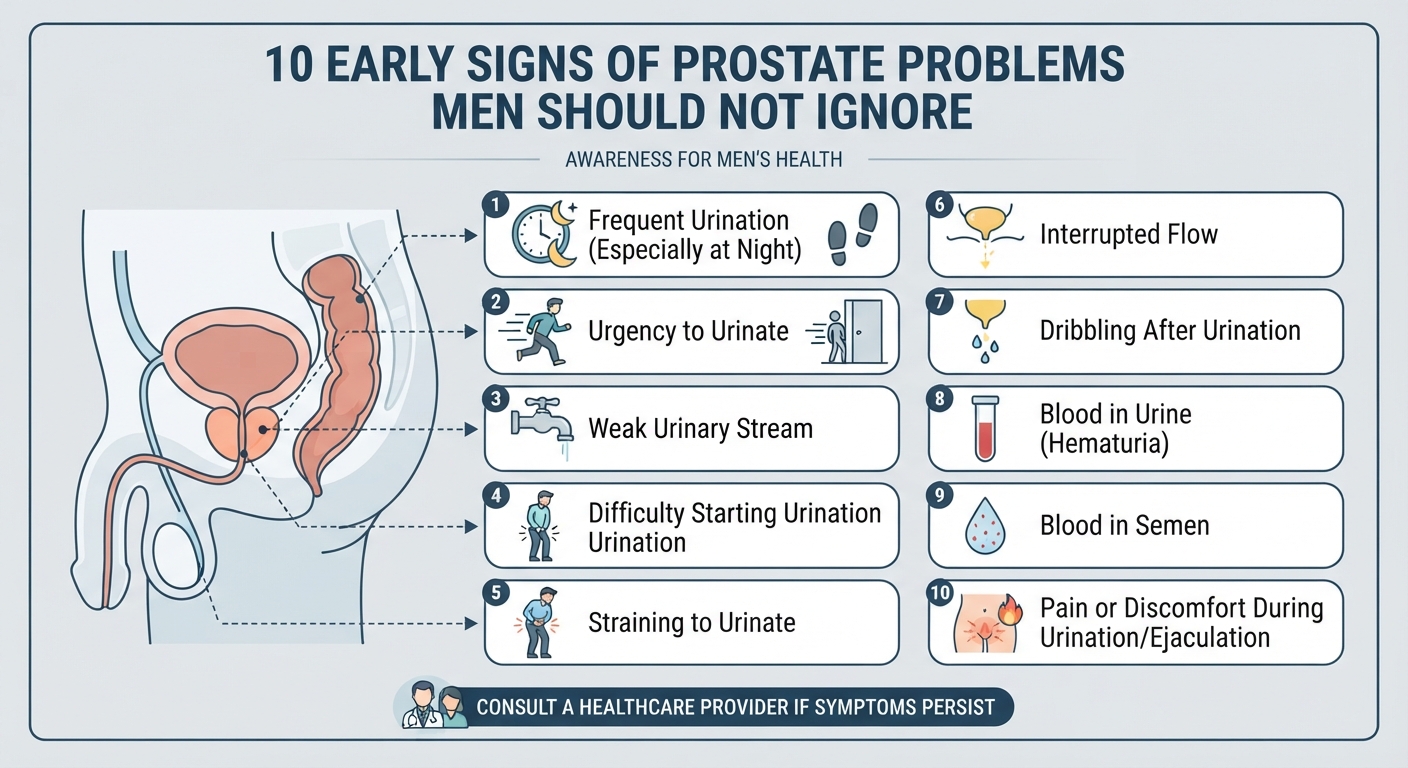
Prostate problems can affect how a man urinates, feels, and goes about his daily life. Some symptoms develop slowly, while others may appear suddenly.
The prostate is a small gland located below the bladder. It helps produce the fluid that carries sperm. As men get older, the prostate may become enlarged. It can also become inflamed or develop cancer.
The important fact is this: prostate cancer may not cause symptoms in its early stages. Therefore, feeling healthy does not always mean that your prostate is healthy.
Here are 10 symptoms men should know.
1. Frequent Urination
Do you urinate more often than usual, even when you have not been drinking much water?
Frequent urination can be a sign of an enlarged prostate. As the prostate grows, it may press against the tube that carries urine out of the bladder.
However, frequent urination can also result from diabetes, urinary infections, or other conditions.
2. Waking Up Often at Night to Urinate
Getting up once in a while to urinate may not be unusual. However, regularly waking up several times during the night to use the toilet may indicate a problem.
An enlarged prostate can make the bladder feel full even when it contains only a small amount of urine.
If this problem continues or affects your sleep, speak with a healthcare professional.
3. Difficulty Starting Urination
Do you sometimes stand at the toilet and struggle to start urinating?
Difficulty starting the flow of urine is another possible sign of an enlarged prostate. You may need to wait, strain, or push before urine begins to flow.
Do not ignore this symptom if it happens regularly. A medical examination can help identify the cause.
4. Weak or Interrupted Urine Flow
A healthy urine stream usually flows without repeatedly stopping and starting.
Prostate enlargement can narrow the passage through which urine leaves the bladder. This may cause a weak stream or a flow that stops and starts.
These changes do not automatically mean you have cancer. However, persistent changes in urination should be checked.
5. Feeling That Your Bladder Is Not Empty
Do you finish urinating but still feel that some urine remains in your bladder?
This feeling may occur when an enlarged prostate prevents the bladder from emptying properly.
Some men return to the toilet shortly after urinating because they still feel the need to go.
If you regularly experience this problem, arrange a medical assessment.
6. Pain or Burning When Urinating
Pain or a burning sensation when urinating may indicate inflammation of the prostate, known as prostatitis. A urinary tract infection can also cause similar symptoms.
Prostatitis may occur in younger or older men. It can also cause discomfort around the penis, testicles, lower abdomen, or area between the scrotum and anus.
Seek medical advice if you experience painful urination, particularly if it continues or comes with fever.
7. Blood in the Urine
Blood in the urine should never be ignored, even if it appears only once.
The urine may look pink, red, or brown. Blood can occur because of infections, kidney or bladder problems, prostate conditions, or cancer.
You cannot determine the cause by looking at the urine alone. Seek prompt medical assessment.
8. Blood in Semen
Blood in semen can look pink, red, or brown.
It may result from inflammation, infection, or other conditions affecting the reproductive system. In some cases, it can be associated with a more serious problem.
Although it does not automatically mean cancer, arrange a medical check if you notice blood in your semen.
9. Pain During Ejaculation
Some men experience pain or discomfort during or after ejaculation.
This can occur with prostatitis and other conditions affecting the prostate or nearby organs.
Do not feel embarrassed about discussing this symptom with a healthcare professional. Explaining when the pain occurs can help the clinician determine what tests may be needed
10. Persistent Pain in the Back, Hips, or Pelvis
Pain that does not go away in the lower back, hips, or pelvic area can have many causes.
In some cases, persistent pain in these areas may occur when prostate cancer has spread beyond the prostate. However, ordinary muscle, joint, and back problems are much more common causes of pain.
Seek medical attention if the pain is persistent, unexplained, or accompanied by other worrying symptoms.
Can You Have Prostate Cancer Without Symptoms?
Yes. Prostate cancer often causes no symptoms in its early stages.
This is because the cancer may grow without pressing on the tube that carries urine from the bladder.
Some men discover the condition during medical testing before they notice any changes.
This is why men should discuss their individual risk with a healthcare professional, especially as they get older or if prostate cancer runs in their family
Who Is at Greater Risk of Prostate Cancer?
Several factors can increase a man’s risk:
- Age: The risk increases as men get older, particularly after age 50.
- Family history: Having a father or brother with prostate cancer increases risk.
- African ancestry: Men of African ancestry have a higher risk of developing prostate cancer.
- Inherited gene changes: Certain inherited genetic changes can increase risk.
Having one or more risk factors does not mean that you will develop prostate cancer. It means you should discuss your personal risk with a healthcare professional.
How Do You Know If Your Prostate Is Healthy?
Symptoms alone cannot confirm whether your prostate is healthy.
A healthcare professional may ask about your symptoms, medical history, age, and family history. Depending on your situation, the clinician may recommend:
- A urine test: Checks for signs of infection or other urinary problems.
- A PSA blood test: Measures a substance called prostate-specific antigen. A high result may indicate a prostate problem, but it does not confirm cancer.
- A prostate examination: A clinician may examine the prostate through the rectum.
- Further tests: Scans or other tests may be needed if initial findings suggest a problem.
PSA testing has benefits and limitations. Discuss the possible advantages and disadvantages with a healthcare professional before deciding whether to have the test.
When Should You See a Doctor?
Arrange a medical appointment if you notice persistent changes in urination, pain during urination or ejaculation, or blood in your urine or semen.
Seek emergency medical care if you suddenly cannot urinate at all. This can indicate an urgent blockage. Fever with severe urinary symptoms also requires prompt medical attention. 3 4
Do not wait for symptoms to become severe before seeking help.
Frequently Asked Questions
1. At what age do prostate problems begin?
Prostate problems can occur at different ages. An enlarged prostate becomes more common as men get older, especially after age 50. Prostatitis can affect younger men too.
2. Does frequent urination mean I have prostate cancer?
No. Frequent urination can result from an enlarged prostate, diabetes, urinary infections, or other conditions. A medical assessment is needed to identify the cause.
3. Can an enlarged prostate become cancer?
An enlarged prostate is not cancer, and having benign prostate enlargement does not itself increase the risk of prostate cancer. However, both conditions can occur in the same person.
4. Can prostate cancer be prevented?
There is no guaranteed way to prevent prostate cancer. Healthy habits support general health, but they cannot eliminate the risk. Knowing your family history and discussing your personal risk with a healthcare professional are sensible steps.
5. Does a normal urine flow mean my prostate is healthy?
Not necessarily. Early prostate cancer may cause no symptoms, including no noticeable changes in urination. Whether testing is appropriate depends on your age, risk factors, and personal circumstances.
Join Our Telegram Group
Join Our WhatSapp Group
You May Also Like…
What Are the Warning Signs of Kidney Disease? 10 Symptoms to Know
Your kidneys can be in trouble without you feeling sick. Learn the warning signs your body may...
Why Am I Always Tired? 10 Possible Causes of Constant Fatigue
You sleep, you rest, yet you still feel tired. Why? Constant tiredness can have many causes, and...
What Are the Early Signs of Diabetes? 10 Symptoms You Should Know
You may have diabetes without knowing it. Your body can give you warning signs long before the...
0 Comments